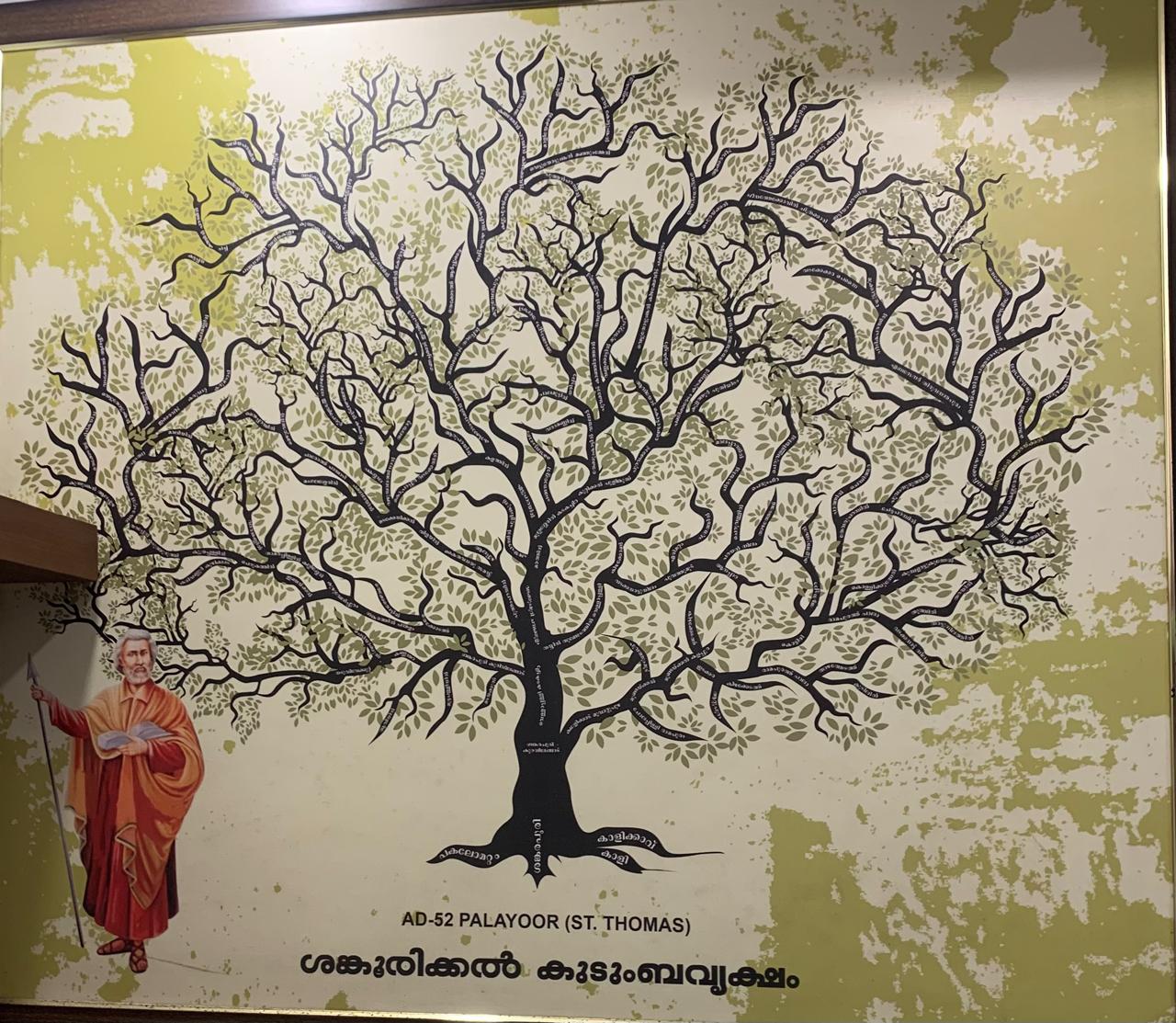
As is widely known, St. Thomas the Apostle, one of the twelve disciples of Jesus Christ, arrived on the Malabar Coast at Kodungallur in AD 52. Following his missionary work in that region, he travelled southward to Palayoor (present-day Chavakkad), where 32 Brahmin families embraced the Christian faith. Among these were four distinguished families: Sankarapuri, Pakalomattom, Kalli, and Kalikavu.
According to oral tradition, facing resistance from local groups, some of the early Christian families migrated further south during the 2nd century and found refuge in the northern region of the Ettumanur chiefdom, in a place called Kalikav. Another version traces their migration from Palayoor (10.56°N), suggesting that in search of safer inland settlements, they followed a discreet maritime route southward. They likely passed through Purakkad (9.77°N) — a smaller west-coast port almost directly aligned in latitude with Kuravilangad (9.77°N). From there, they traveled eastward via Kaduthuruthy (9.80°N), an inland lagoon-accessed port, and continued overland to reach the fertile and naturally fortified valley of Kuravilangad, already known to Jewish traders for its pepper riches.
As the tradition goes, the Blessed Virgin Mary (affectionately known as Muthiyamma) appeared to the children of these migrant families while they were tending sheep in a nearby forested area known then as Kuravan Kadu, now Kuravilangad. During the apparition, she miraculously provided them with food and water by revealing a hidden spring, and instructed them to ask their parents to build a church in her honor, to adore her Son, Jesus Christ. This sacred spring has been preserved as a well near the present- day church and remains a revered site to this day.
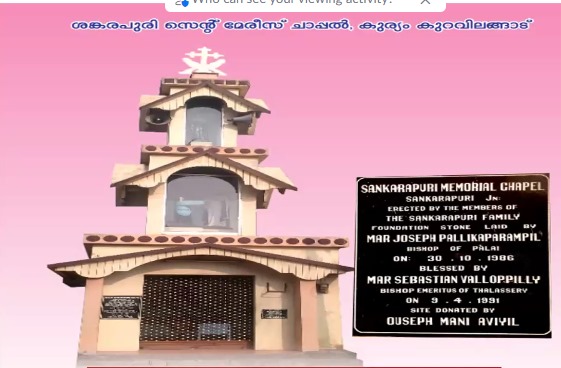
By around AD 345, a permanent church structure was built and solemnly consecrated under the name Marth Mariam Church by Bishop Mar Youseph of Edessa, who had arrived in Kerala with the naval convoy of Knai Thoma. As the community settled along with Marth Mariam Church , a small settlement formed few Kalli and Pakalomattom families settled north of the church (called Vadakkedathu), and Sankarapuri and Kalikavu to the south (called Thekkedathu). The Sankarapuri Thekkedath family was entrusted with the custodianship of the church’s sacristy and altar.
Few words about the church; The next major expansion took place during the visit of Archbishop Dom Menezes in AD 1599, who laid the foundation stone for a new stone-and-mortar church building. This occurred during the vicarship of Palliveettil Chandy of the Paramabil family, who would later become the first indigenous bishop of all Malabar (1638–1687). In the same year, two additional churches were established—one dedicated to St. Joseph and the other to St. Sebastian—and a large granite cross was installed. These developments were carefully recorded by Fr. Francis Ros, who accompanied the Archbishop and affirmed that the principal church was dedicated to the Mother of God. Since then, the church has undergone several reconstructions, all while preserving the original main altar. The most significant of these was in 1954, marked by the addition of twin towers. Today, the church continues to be a center of devotion and heritage, housing the great granite cross, ancient German bells, centuries-old murals, and a symbolic model ship recalling the biblical story of Jonah. The most recent renovation was completed in 2018, undertaken with great care to preserve every historical and sacred artifact.